A Guide to Understanding Pallet Load Capacities
November 3, 2026

One of the first specifications we look at when selecting a pallet is its load capacity. However, making a decision based on the kilogram figure alone may overlook the actual conditions in which the pallet will be used.
The load a pallet can support depends on whether it is stationary on a level surface, being moved, placed on racking or stacked. Load distribution across the pallet and the handling equipment used also affect its performance.
When assessing a pallet’s capacity, the key question is therefore not simply “How many kilograms can it carry?” but “How many kilograms can it carry under which operating conditions?”
Static, Dynamic and Racking Loads Are Not the Same
It is important to understand that the capacity figures specified for a pallet refer to different operating scenarios.
Static load capacity refers to the load a pallet can support while stationary on a level surface. In addition to the total weight, how the load is distributed across the pallet is also important.
Dynamic load capacity refers to the load a pallet can support while it is being moved. During operations involving a forklift, pallet truck or other handling equipment, the pallet must withstand not only the weight of the load but also the forces generated during movement. Static and dynamic load capacities should therefore not be assumed to be the same.
Racking load capacity applies to a different operating condition. Since the pallet is supported at specific points rather than across its entire base, its construction and behaviour under load become particularly important.
The capacity figures in Benoplast’s pallet range clearly illustrate these differences. For example, the GPP-100120 OD model has a static load capacity of 3,000 kg and a dynamic load capacity of 1,000 kg. The GPP-80120 Nestable OD model has a static load capacity of 3,600 kg and a dynamic load capacity of 1,200 kg; racking use is not recommended for this model.
When reviewing a kilogram figure in a technical data sheet, always check the operating condition to which it applies.
Load Distribution Matters as Much as Load Weight
The load on a pallet is about more than its total weight.
For example, a 1,000 kg load distributed evenly across the pallet surface does not have the same effect as the same weight concentrated in a small area. Concentrating the load at specific points or allowing it to overhang the edges can change the loading conditions to which the pallet is subjected.
When selecting a pallet, consider the load’s weight, footprint, distribution and position on the pallet together.
With heavy or compact products in particular, point loads are an important factor that may be overlooked if only the overall capacity is considered. In stacking applications, it is also necessary to consider how the pressure created by the loads above is transferred.
How the Pallet Is Handled Matters Too
Pallet design matters not only for the load it supports, but also for how that load is handled.
The design of forklift and pallet-truck entry points, the number of runners, the underside structure and the top-deck design can all affect how the load is supported and how forces are distributed during handling.
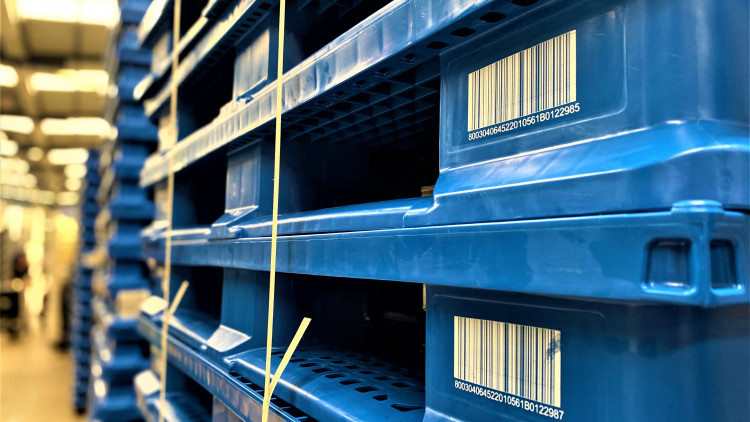
Benoplast’s general-purpose pallets are available with different runner configurations. For some models, metal reinforcements can also be used to increase racking load capacity. Depending on the product design, different solutions are available for forklift, pallet-truck and conveyor applications.
Pallet selection should therefore take into account not only the product’s load capacity but also its compatibility with the handling equipment used.
Automated Systems Have Different Requirements
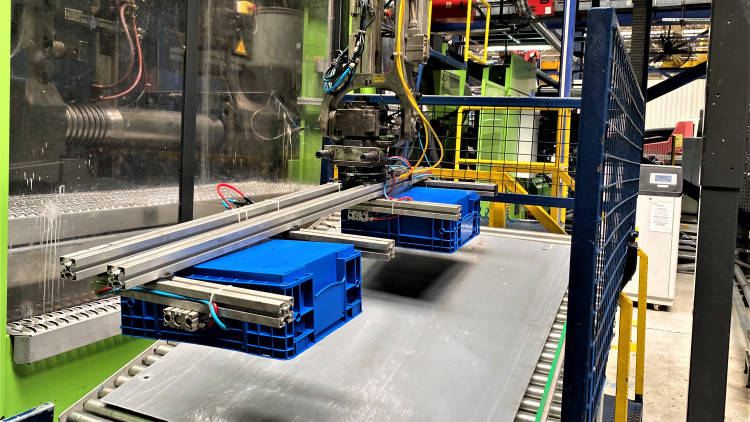
In automated handling systems, conveyors and automated storage solutions, the performance expected of a pallet goes beyond load-bearing capacity.
In these applications, dimensional consistency, equipment compatibility, top- and bottom-deck geometry, and behaviour under load become important. The pallet must move correctly through the system and keep the load stable to help maintain operational continuity.
When selecting pallets for a facility that uses automation, assess how the pallet will perform as part of the existing system.
One Pallet May Not Suit Every Operation
These differences are among the reasons Benoplast’s pallet range includes products designed for a variety of applications.
From general-purpose and hygienic pallets to export and nestable solutions, product design features and performance specifications vary according to the intended application.
For example, the HYG2-80120 3R model has a static load capacity of 5,800 kg, a dynamic load capacity of 1,450 kg and a racking load capacity of 1,200 kg. A single “load capacity” figure would not fully describe the product’s performance under different operating conditions.
For nestable pallets, product selection also takes into account operational benefits such as the reduced space required to store empty pallets, in addition to load-bearing performance.
Questions to Ask When Selecting a Pallet
To identify the right product, first define the intended operating scenario:
- How heavy is the load?
- How will the load be distributed across the pallet?
- Will the pallet be used on the floor, stacked or placed on racking?
- Will a forklift, pallet truck, conveyor or automated handling system be used?
- Under what operating conditions will the pallet be used?
- Is it intended for a one-way application or for repeated use?
The answers to these questions help determine the pallet features required.
For racking and automation applications in particular, it is important to assess not only the pallet’s load capacity but also its compatibility with the system.
Conclusion: Load capacity matters only under the right conditions
Assessing a pallet’s performance solely by the kilogram figure stated for it may overlook important aspects of the intended application. Two pallets rated to carry 1,000 kg, for example, may not be equally suitable for the same operation.
The aim when selecting a pallet is not simply to find the highest capacity rating. It is to identify the right solution by considering the required load, the operating conditions and the needs of the operation together.
A good pallet does more than carry a load: it performs in a way that meets the requirements of the system in which it is used.
 Twitter