PPWR: Reusable Transport and Storage Packaging Why Is It Becoming More Important?
September 14, 2026

The packaging industry is moving beyond solutions designed solely to protect and transport products toward more circular models in which resources are used more efficiently and packaging is kept within the system for as long as possible. The European Union’s Packaging and Packaging Waste Regulation (PPWR) is one of the key steps in this transformation.
Adopted on 19 December 2024 and entering into force on 11 February 2025, the PPWR began to apply as of 12 August 2026. The regulation introduces comprehensive requirements covering different stages of the packaging life cycle, from packaging design and use to reuse, recyclability and waste management.
Why Is Reducing Packaging Waste Important?
One of the key objectives of the PPWR is to reduce packaging use and the resulting amount of packaging waste in the European Union.
According to Eurostat data, approximately 79.7 million tonnes of packaging waste were generated in the EU in 2023. This corresponds to an average of 177.8 kg of packaging waste per person. In the same year, plastic packaging waste amounted to 35.3 kg per person.
This picture shows that increasing recycling capacity alone is not enough. Reducing packaging waste at the source and extending the useful life of packaging as much as possible are also becoming increasingly important. This is where reuse comes to the forefront.
What Does the PPWR Bring for Reusable Packaging?
Under the PPWR, it is not sufficient for reusable packaging simply to be capable of being used more than once. Packaging is expected to be designed for multiple use cycles and developed to achieve as many rotations as possible under normal and foreseeable conditions of use. Relevant requirements relating to health, safety and hygiene must also be met.
This approach takes the concept of reuse beyond product durability. The collection, return, reuse, maintenance or reconditioning when necessary, and traceability of packaging are also becoming important parts of the system.
Reuse Targets for Transport Packaging
One of the notable aspects of the PPWR is the introduction of reuse targets for transport packaging.
From 2030, the regulation aims for at least 40% of certain transport packaging to consist of reusable packaging, with this share increasing to 70% by 2040.
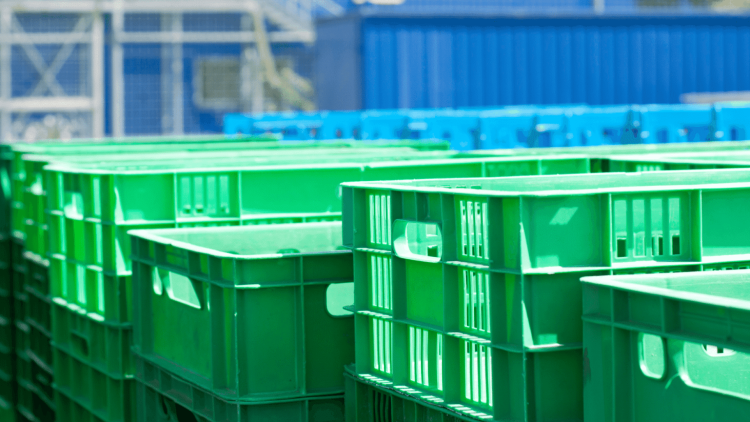
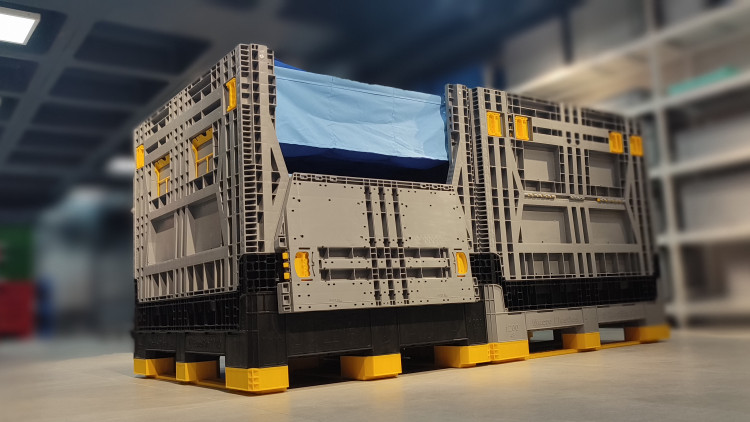
This scope directly concerns a wide range of solutions, including pallets, collapsible plastic containers, boxes, plastic crates and various large-volume transport packaging solutions. As a result, reusable transport packaging is becoming more than simply a preferred alternative from a sustainability perspective; it is becoming a solution that businesses need to consider more closely as part of their packaging strategies.
Why Is Reusable Transport Packaging Gaining Importance?
The role of transport and storage packaging is not limited to moving products from one point to another.
Packaging design can affect many processes, from product protection and storage and stacking efficiency to handling and the efficient use of logistics space.
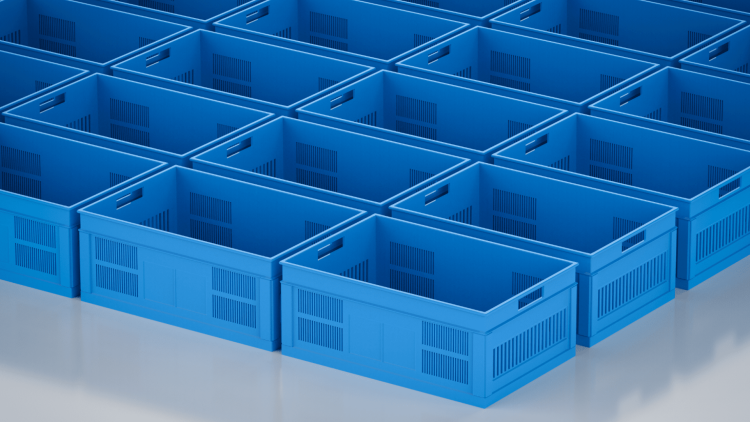
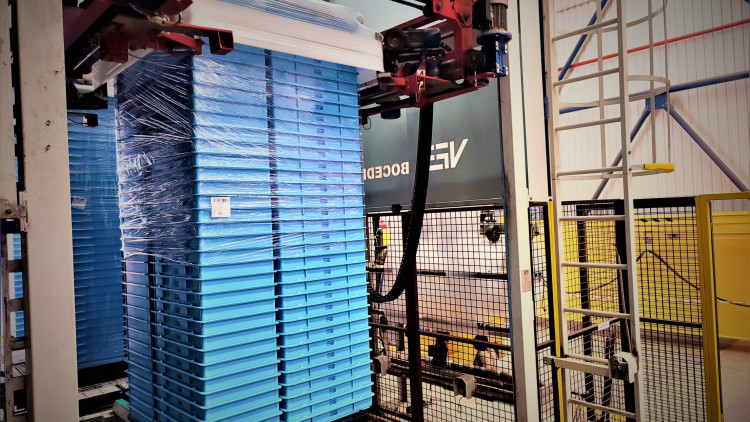
With their durable structures designed for multiple use cycles, reusable plastic transport and storage packaging solutions can provide significant advantages in these processes. Nestable designs help reduce the volume occupied during empty returns, while stackable solutions enable more efficient use of space when storing and transporting loaded products.
For this reason, the reusable packaging approach should not be viewed simply as a different material choice, but rather as an approach that rethinks the entire use cycle of packaging.
The System Approach Is Becoming Increasingly Important in Reuse
Durability alone is not enough for reusable packaging to create value. A system must also be established to ensure that packaging is returned and reintroduced into circulation.
In this context, processes such as reverse logistics, packaging pool management and traceability are becoming increasingly important. Particularly in large and multi-location operations, tracking where packaging is, how many times it has been used and when it will be ready for reuse can become an important part of packaging management.
Traceability: A Complementary Element of Reuse
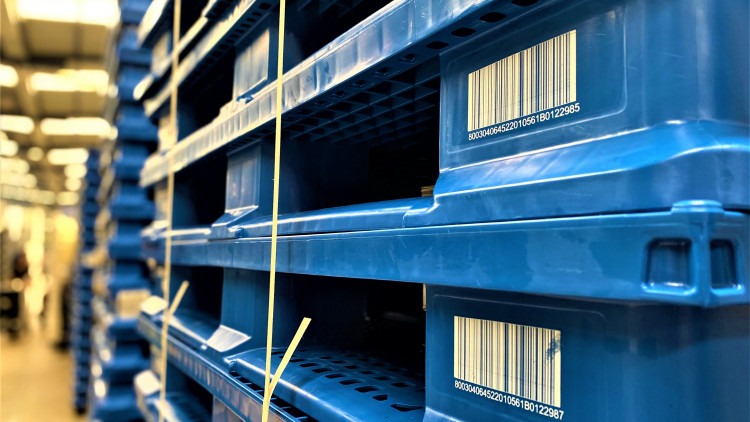
The PPWR also includes provisions concerning specific labelling requirements and digital data carriers for reusable packaging.
In particular, from 12 February 2029, certain reusable packaging placed on the market will be required to carry a label indicating that it is reusable, while additional information is expected to be made available through a QR code or another standardised, open digital data carrier.
These developments indicate that the transport packaging of the future will need to be not only physically durable but also digitally manageable and data-enabled.
PPWR: More Than Compliance
Viewing the PPWR solely as legislation introducing new obligations may overlook an important part of the transformation.
More durable packaging, efficient stacking, space optimisation during empty returns, better product protection and packaging traceability can bring sustainability objectives and operational efficiency together.
At the same time, not every reusable packaging solution can be expected to deliver the same results for every business. Factors such as frequency of use, transport distances, return rates, cleaning or maintenance requirements, product safety and the structure of the logistics network need to be considered together.
Therefore, the transition to reusable packaging should be approached not simply as a product selection, but as part of a comprehensive packaging strategy.
More Circular Packaging Solutions with Benoplast
Reusable transport and storage packaging is one of the core elements of Benoplast’s product and solution approach.
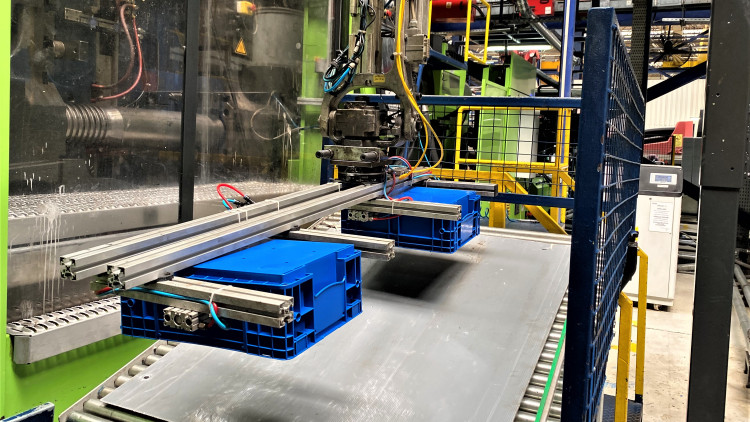
Boxes, containers, pallets and other transport solutions are developed to enable the safe transport, storage and handling of products across different industries, while reuse and logistics efficiency remain important components of the design.
From ventilated boxes used in the agricultural and food sectors to VDA-compliant KLT solutions for the automotive industry, and from high-volume containers to pallets, reusable plastic packaging solutions designed for a wide range of applications can help reduce the need for single-use alternatives.
Another important element of circularity is recovering the material at the end of the packaging’s useful life and returning it to the production cycle. This makes it possible to extend the value of the packaging while also ensuring that the material is recovered and reused.
Less Waste, More Cycles
With the PPWR, the packaging industry has entered an important period of transformation. Reusable transport and storage packaging is one of the key building blocks of this transformation.
In the coming period, packaging systems are expected to become more durable, traceable, efficient and circular.
At Benoplast, we believe that packaging is not merely an element of the product being transported, but an important component of more sustainable and efficient systems.
Because a more sustainable future will depend not only on increased recycling, but also on packaging systems that generate less waste, remain in use for longer and circulate as many times as possible.
Sources
- European Union, Regulation (EU) 2025/40 on packaging and packaging waste (PPWR).
- Eurostat, Packaging waste statistics.
 Twitter