The Logistics of Empty Packaging: The Product Has Been Delivered, But Where Is the Box?
November 24, 2026

It is easy to assume that a logistics operation ends when a product reaches the customer.
However, when a product is transported in reusable transport and storage packaging, one of the most important questions arises precisely at that point:
The product has been delivered. But where is the packaging?
Once a box, container or pallet has completed its role in transporting the product, it becomes empty, but its function within the logistics system does not end there. To be reused, it must return to the right place at the right time. Therefore, in reusable packaging systems, it is not only the durability and load-bearing capacity of the packaging that matter, but also where it is, how long it takes to return and how quickly it can be made ready for its next use.
Empty Packaging Matters Just as Much as Full Packaging
With single-use packaging, its logistical value largely comes to an end once the shipment is completed. With reusable packaging, however, a new process begins after the product has been delivered.
Empty packaging needs to be returned to the production facility, distribution centre or next point of use. This process is known as reverse logistics.
GS1 (Global Standards 1) classifies pallets, boxes and similar reusable transport equipment as "Returnable Transport Items (RTIs)" and provides standards for identifying and tracking these assets throughout the supply chain.
The fundamental principle is simple:
If packaging is to be reused, its return journey must be planned from the very beginning.
Why Can an Empty Box Become a Logistics Challenge?
After products are delivered to customers, empty packaging may remain at different locations, be transferred to other warehouses, become damaged or even disappear from the system.
As a result, the total number of packaging units owned by a business may differ from the number actually available when needed.
Longer return cycles can lead to higher packaging inventory requirements, additional transportation and tracking costs, lower reuse frequency and, at times, packaging availability issues.
Therefore, the challenge is not simply to retrieve the packaging.
What really matters is getting it back on time.
What Do Global Practices Tell Us?
In global reusable packaging applications, the post-delivery process is considered an integral part of the system.
In pooling and reusable packaging models, the collection of empty pallets and packaging, asset tracking and preparation for reuse are managed together. Some companies also incorporate operations such as reverse logistics, inventory management, sorting, cleaning, maintenance and repair into this process.
The common message behind these practices is clear:
The life cycle of packaging does not end when the product is delivered.
Why Does Design Matter in the Return of Empty Packaging?
Reverse logistics is not just an operational issue. Packaging design can also directly affect the efficiency of empty returns.
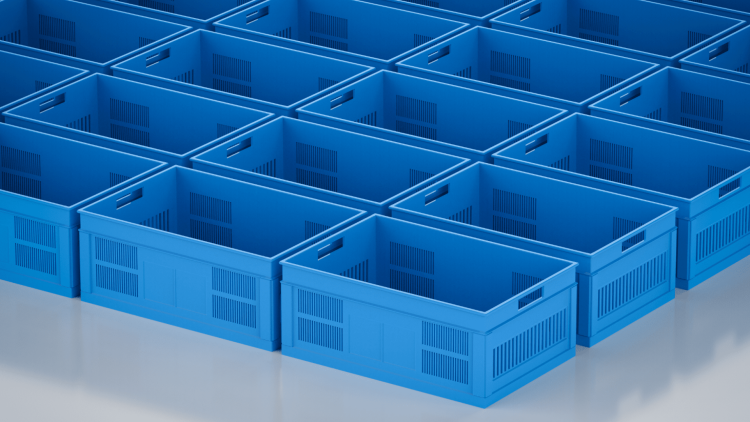
The ability of empty boxes to nest or stack helps make more efficient use of transportation space during return journeys. In particular, nestable designs reduce the volume occupied by empty packaging, contributing to more efficient logistics planning.
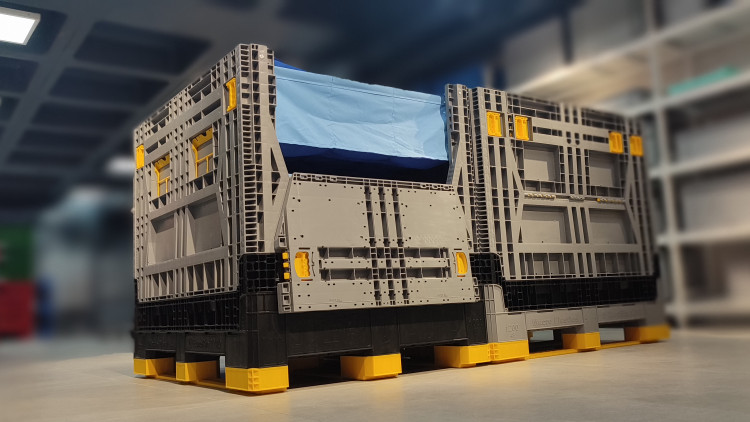
Foldable solutions offer similar advantages by reducing the space they occupy when not in use, making storage and return transportation more efficient.
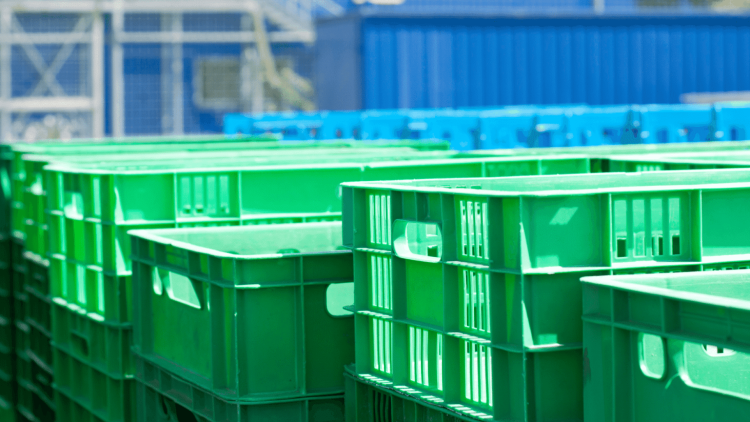
Benoplast's product portfolio offers various solutions to address these needs. Designed for the transportation and storage of agricultural products, conical boxes can be stacked when full and nested when empty, helping optimise space during return operations. Foldable solutions such as ISOBIN, Eurobin and Industrial Foldable Boxes also help reduce the volume occupied when not in use.
However, the key consideration is not simply whether packaging is nestable or foldable.
Good packaging design creates value when combined with a well-planned return process.
Knowing Where Your Packaging Is
Knowing how many packaging units a business owns is not enough.
What really matters is knowing how many units are available for use and located in the right place when needed.
For this reason, asset tracking and visibility are becoming increasingly important in reusable packaging systems. GS1's GRAI (Global Returnable Asset Identifier)* standard supports the identification and tracking of reusable assets such as boxes and pallets.
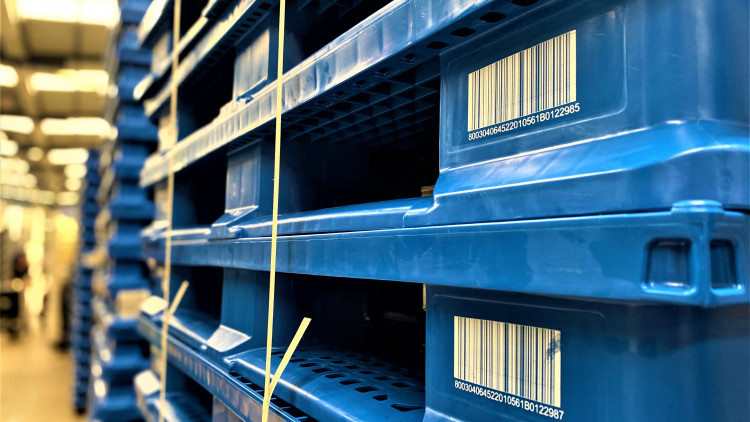
Different identification technologies, including RFID, barcodes and QR codes, can be used to enable this tracking. The aim of these technologies is not necessarily to monitor every packaging unit continuously, but rather to provide visibility into its location within the system, its movements and how long it takes to return.
Packaging design also plays an important role here. Considering suitable design features that allow RFID tags and other tracking technologies to be applied to packaging helps facilitate integration with digital tracking systems.
At Benoplast, we develop design solutions that support RFID tag applications and the integration of different tracking systems into packaging. This enables our customers to incorporate tracking technologies into their packaging solutions in line with their specific logistics and operational requirements.
Key performance indicators such as return rates, return cycle times, loss rates and damage rates also help businesses assess the efficiency of their packaging cycles.
The True Cost of Packaging Is More Than Its Purchase Price
When evaluating the performance of reusable packaging, looking only at its purchase cost is not enough.
How long the packaging remains in use, how quickly it returns, how many times it can be reused, how much space it occupies during empty returns and how much of it remains outside the system all affect its overall economic performance.
Therefore, the more relevant question is not:
"Which packaging is cheaper?"
But rather:
"Which packaging performs more efficiently within its own logistics cycle?"
The Product Moves On, but the Packaging's Journey Continues
The value of reusable transport and storage packaging is not realised in a single shipment, but throughout the cycles it completes.
An efficient reusable packaging system therefore requires the right packaging, the right design, an effective return plan and proper tracking to be considered together.
The Importance of Reuse Is Growing with the PPWR
The European Union's Packaging and Packaging Waste Regulation (PPWR) aims to increase packaging reuse and strengthen reusable packaging systems. From 2030 onwards, reuse targets will apply to transport packaging such as pallets, plastic boxes and foldable plastic boxes.
This approach makes not only the use of reusable packaging important, but also the efficient return of packaging within the system and its reintegration into the reuse cycle.
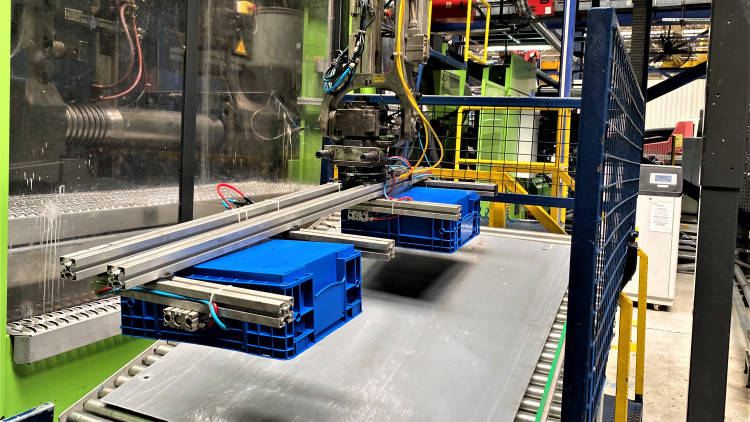
At Benoplast, we develop transport and storage packaging solutions for a wide range of needs, from boxes, containers and pallets to foldable and nestable solutions.
Because what matters is not only whether packaging delivers a product safely.
It is also what happens when it becomes empty.
The product has been delivered. But where is the box?
 Twitter